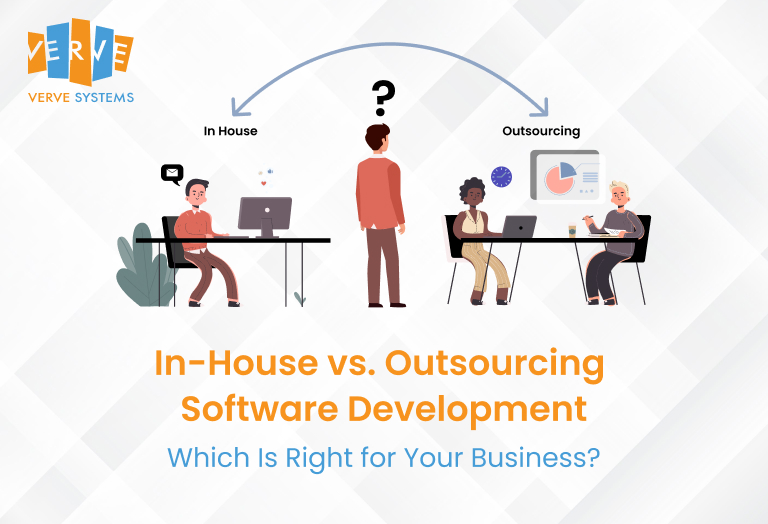
According to a survey by Deloitte, 53% of businesses outsource their IT functions and small businesses invest 6.1% of their IT budget in IT outsourcing, while mid-sized firms invest 4.6% and large-sized businesses invest 7.4%. Offshoring development has huge benefits. Across industries, businesses have realized the value of outsourcing IT to teams who are better equipped and who have the right skills to do so. Offshoring can dramatically reduce and control expenses, improve business focus and reduce time to market.
Offshore development comes with three specific models of engagement:
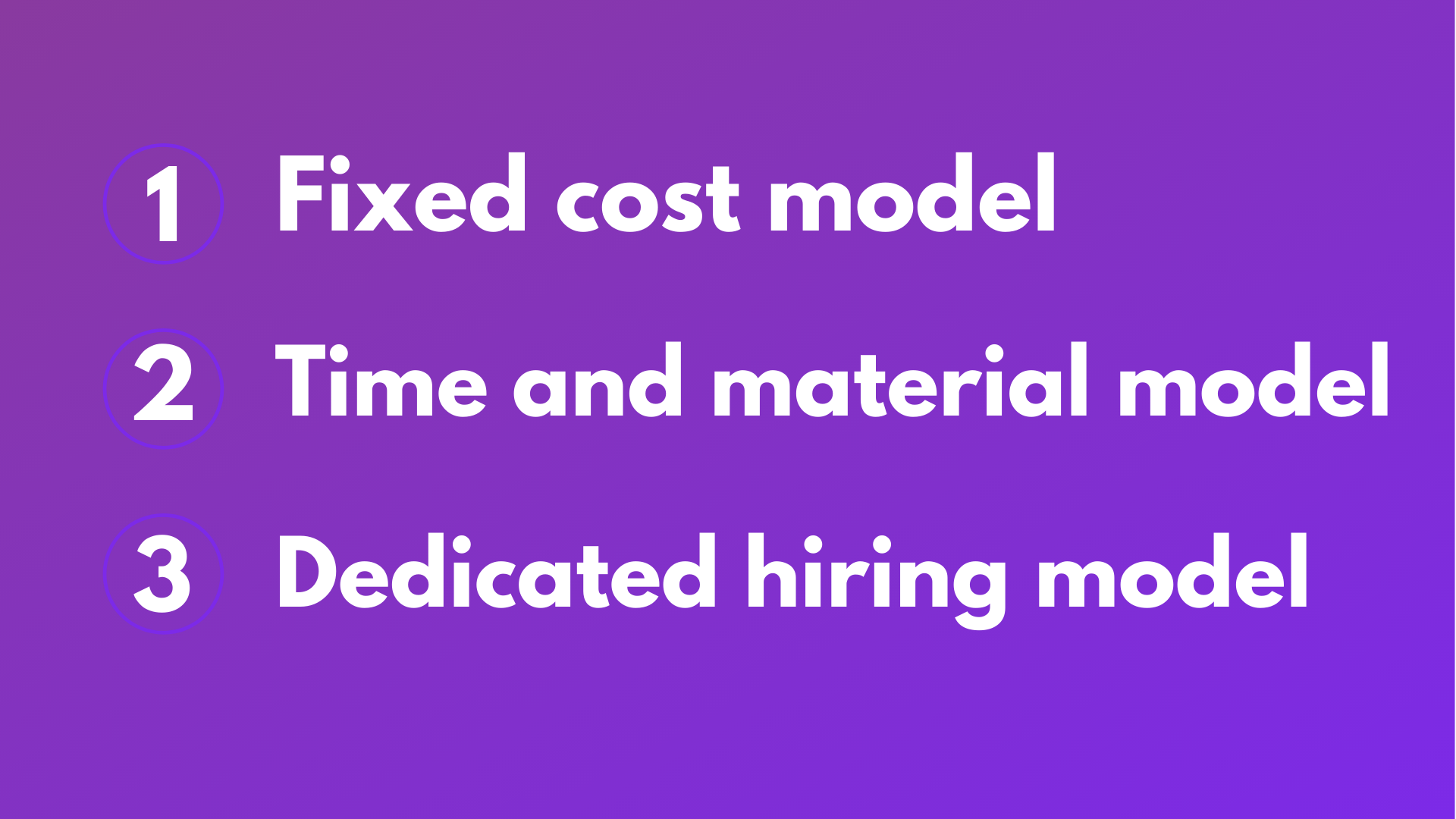
Each engagement model has its own pros and cons, so it’s essential that you understand each one before selecting:
- Fixed Cost Model: With a fixed cost model, you pay a pre-agreed, fixed price for the project. So, it’s a good choice if you have a short-term project with well defined goals and work flow and results. It works when the project requirements are fixed and no major changes are needed after project begins.
- Time and material model: This involves gradual and continuous web development and a pay per use kind of engagement model. It uses agile project execution where requirements are not well defined and are subject to changes. Plus, you pay for what you want to pay.
- Dedicated hiring model: With dedicated hiring, you can hire resources that will work specifically for the project at hand. You pay a fixed monthly fee for the resources you use. Since the goals are unclear, the development can be flexible and changes can be easily accommodated.
Whether you have a small, one time project or ongoing development, every model is different and you can choose the one that suits your requirements.